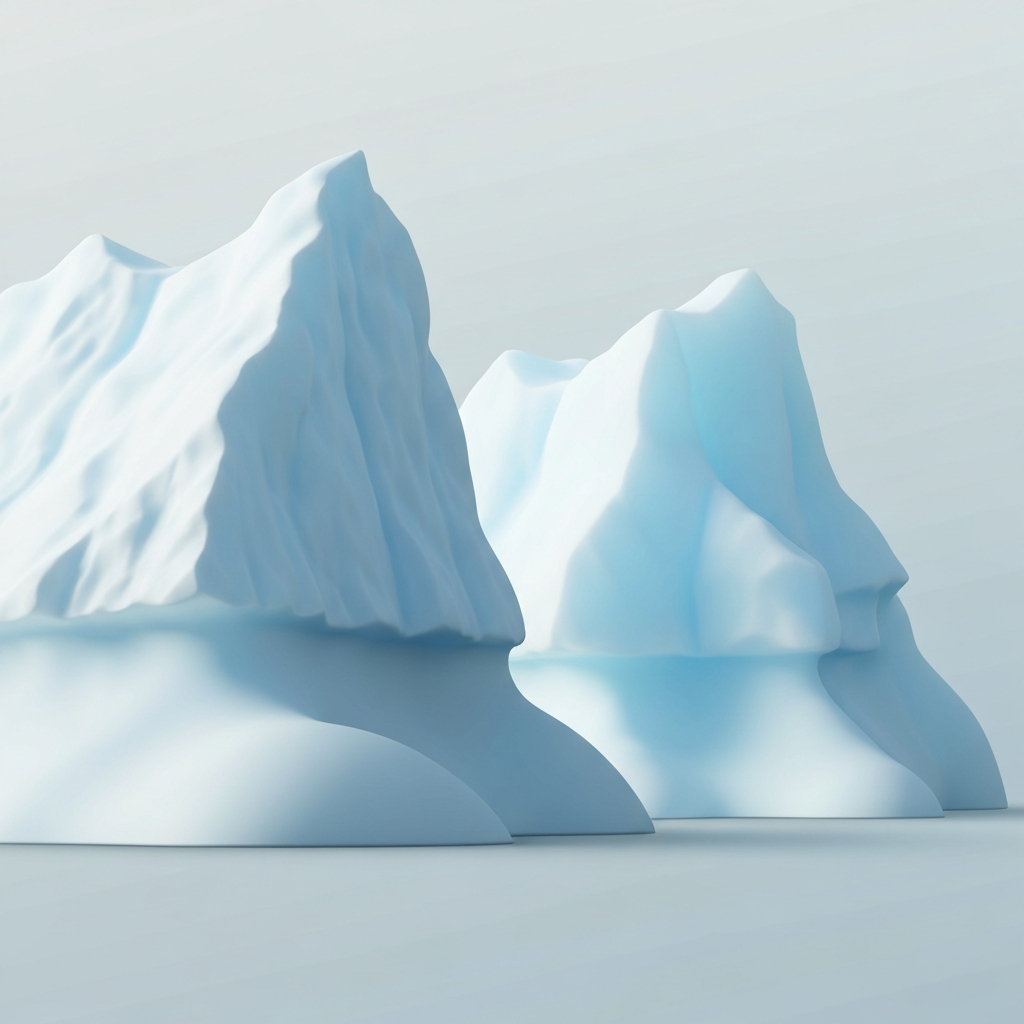
Did You Know?
Some icebergs are as big as a house!
How Icebergs Form
Icebergs form when ice breaks off a glacier.
Where Icebergs Are Found
Icebergs are found in cold seas, like the Arctic.
What Icebergs Do
Icebergs help keep the sea cool.
They can break apart and make waves.
Icebergs can be homes for birds.
They can be a risk for ships.
Icebergs can float for a long time.
They can change shape in the sun.
More About Icebergs
Icebergs are made of fresh water. They can be very big and heavy. Some icebergs can be as tall as a tall building. They break off from glaciers when the ice gets too big.
Icebergs are important for the sea. They help keep the ocean cool. They also give homes to some sea animals. People study icebergs to learn more about the Earth.
In the future, icebergs may change. They can melt if the sea gets warm. This can change the sea level. Icebergs are cool and fun to learn about!