Did You Know?
Some robots learn to play games!
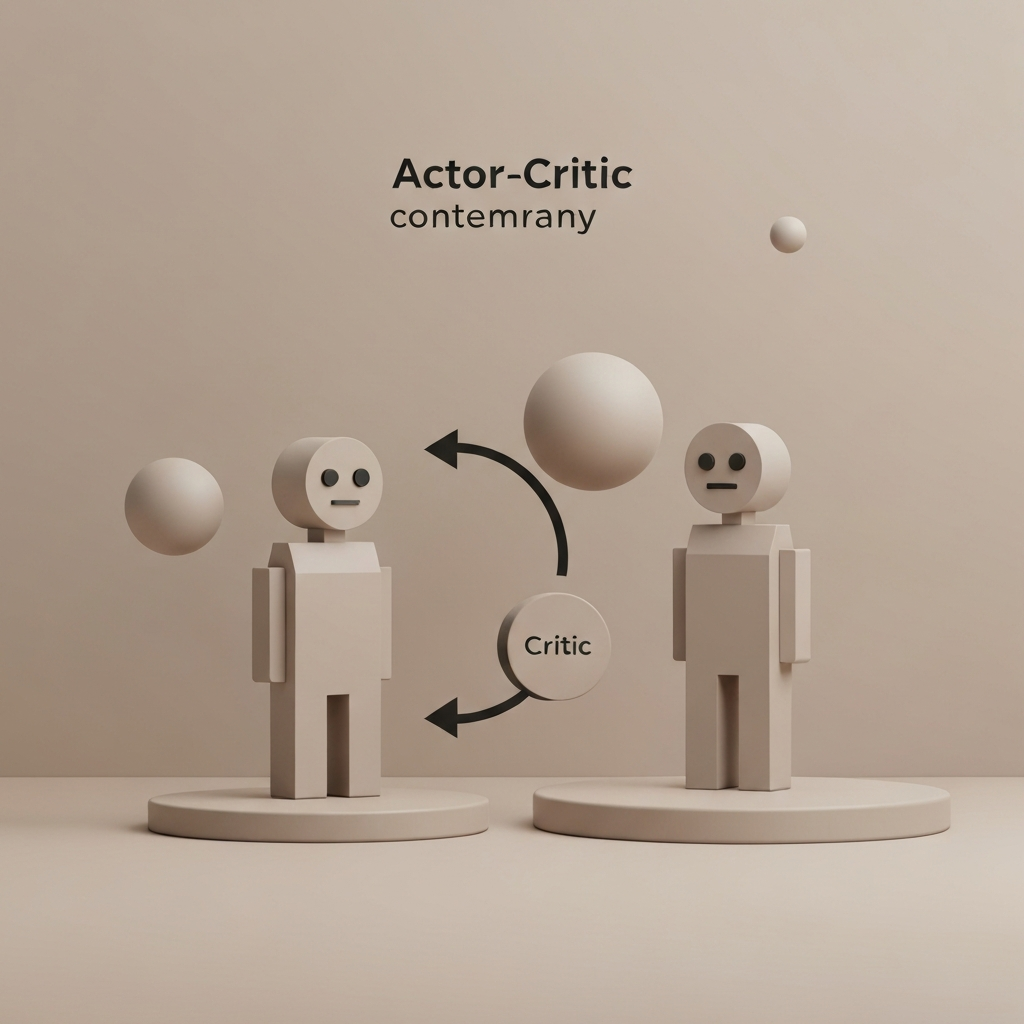
The Actor
The actor makes the moves or choices.
The Critic
The critic checks if the move is good.
What actor-critic algorithm Does
It helps robots learn fast.
It makes choices and checks them.
It is like a game for robots.
It helps in many tasks.
It works with fun games too.
It can help with smart toys.
More About actor-critic algorithm
Long ago, people wanted to teach robots. They made ways for robots to learn. The actor-critic was one of these ways. It helps robots get better at tasks.
Today, we see robots in games and homes. They learn from us and get better. This makes them fun and smart. We can play with them and see them grow!
In the future, robots will learn even more. They might help us in new ways. Maybe they will help us cook or clean. The actor-critic will help them learn fast!
How Topics Connect
graph TD
A["Actor-Critic Algorithm (AC)"] --> B["Reinforcement Learning (RL)"]
A --> C["Policy-Based Algorithms"]
A --> D["Value-Based Algorithms"]
C --> E["Policy Gradient Methods"]
D --> F["Value Iteration"]
D --> G["Q-Learning"]
D --> H["SARSA"]
D --> I["TD Learning"]
What Do These Words Mean?
actor-critic algorithm:A method in machine learning that uses two parts: one that decides what action to take and another that evaluates how good that action was.
reinforcement learning:A type of machine learning where an agent learns to make decisions by trying things and getting rewards or penalties.
policy-based:An approach that focuses on directly deciding what actions to take based on a strategy.
value-based:An approach that focuses on estimating how good different actions are based on their expected rewards.
Q-learning:A method in reinforcement learning that helps an agent learn the best actions to take by using a table of values.